
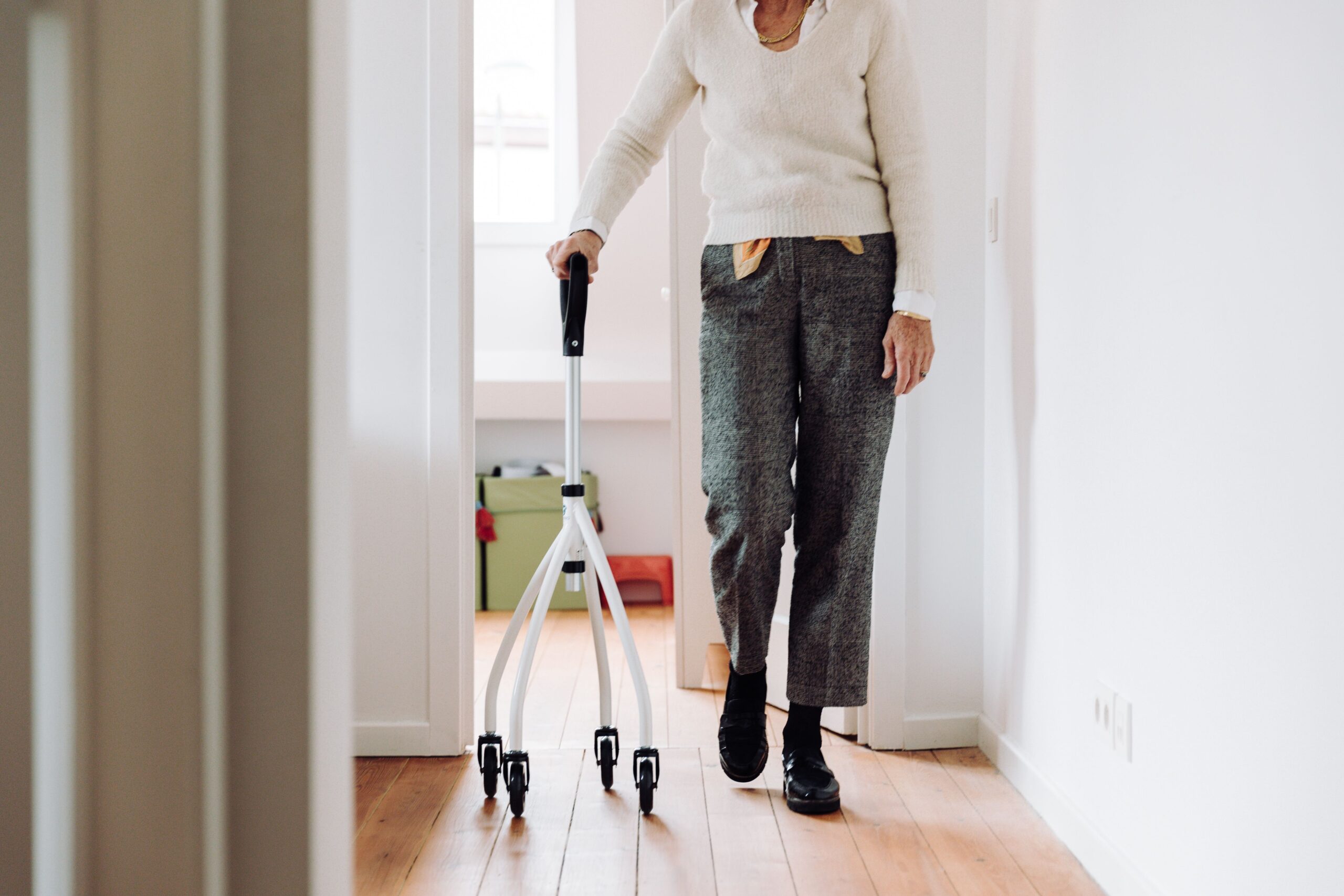
For older parents or grandparents dealing with years of knee pain or arthritis, knee replacement surgery can be the permanent solution they need. But, before the surgery brings the long-term relief it promises, your loved one will have to face the big temporary adjustment the moment they are cleared to go home. Simple things like getting out of bed, walking to the bathroom, preparing meals, or even sitting down comfortably can suddenly feel difficult.
The good news is that knee replacement recovery at home is possible with the right support and a safe environment.
Preparing Your House for a Knee Replacement Recovery At Home
Remove Trip Hazards
Since walking will be extremely difficult and even impossible at first, any obstacles that can further complicate your loved one’s movement or, worse, cause danger should be removed. So try to clear walking paths of any loose rugs, clutter, electrical cords, or slippery floors so your loved one can move easily with a walker or cane. It’s also helpful to place important items within reach to avoid unnecessary stretching or bending.
Bathroom Safety Modifications 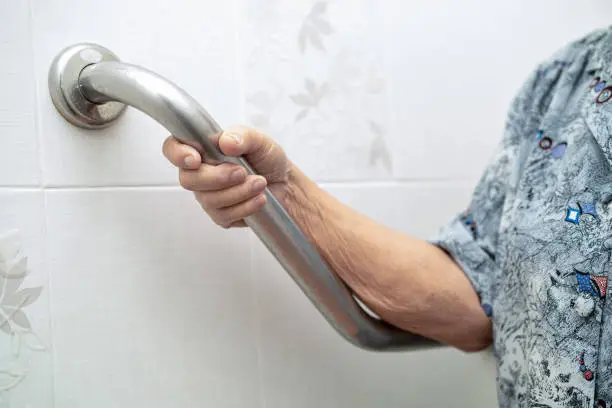
The next place to keep in mind is the bathroom. Wet floors, slippery surfaces, and the need to sit or stand can increase the risk of falls. They can be very dangerous, especially during the first few weeks of recovery. Little tweaks around the bathroom, like installing grab bars near the toilet and shower, placing non-slip mats on the floor, using a shower chair, and keeping toiletries and other essentials within easy reach, can help maintain safety during recovery.
Setting Up a “Recovery Station”
Another tip is to set up a recovery station. In conditions where moving feels tiring, uncomfortable, or painful, at worst, a place to rest the leg can be a savior. The spot should be set up with a comfortable chair with good support, ideally in the middle of the room where many activities occur. Keep essentials ready, such as medications, water, a phone charger, books, snacks, and other items to make it a relaxing place to focus on healing.
Navigating Daily Challenges During Post-Surgery Rehabilitation
Personal Care & Hygiene
Even simple activities pre-surgery, like bathing, getting dressed, or using the bathroom, can become challenging post-surgery. Navigating these activities during knee replacement recovery at home should be done slowly with the help of supportive tools and someone. A walker and grab bars support mobility, while a professional caregiver can offer gentle assistance and peace of mind.
Maintaining Proper Nutrition
What you put inside your body matters every day. Yet, it matters more in times like recovery. Nutritious meals consist of proteins, carbs, fat, vitamins, and minerals, which give the body strength to repair itself. Hydration, on the other hand, is especially important during physical therapy sessions (in addition to the minimum daily intake, of course). If preparing meals becomes somewhat difficult, help from family members or caregivers may be needed.
Strict Medication Management
Staying on top of medications is also a huge part of knee replacement recovery at home. After the surgery, there will be a lot of medication being prescribed–from antibiotics, pain medication, and other drugs–to help manage discomfort and prevent complications. It may be easy to get confused and lose track with all the different meds and schedules, making the help of managing medication a necessity.
How Professional Caregivers Enhance Knee Replacement Recovery At Home
Support with Activities of Daily Living (ADLs)
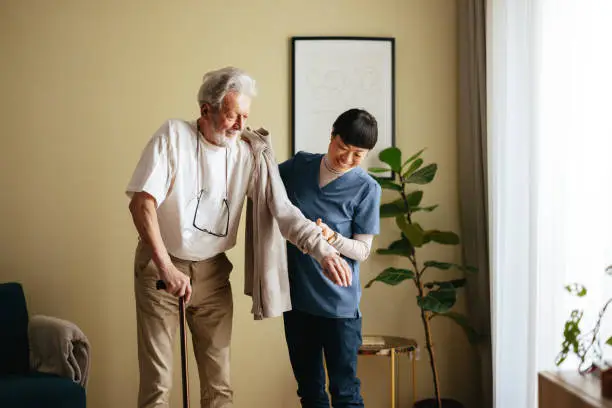
Professional caregivers have the training and experience to make a knee replacement recovery at home possible. By helping with daily activities, from moving around the house, bathing, to preparing nutritious meals, professional caregivers can surely help reduce physical strain and give your loved one more confidence as they regain strength and independence in the comfort of home.
Light Housekeeping and Home Management
Day-to-day living activities also consist of keeping up with household chores. That’s why tasks like laundry, taking out trash, and, more importantly, tidying up to make sure no tripping hazard is lying around the house, are also made it to every professional caregiver’s priority list. A clean, organized home helps create a safer environment and makes the knee replacement recovery at home period less overwhelming for everyone involved.
Emotional Support and Companionship
The road to recovery is not just physically challenging but can also be emotionally difficult. It’s not rare to see some frustration, isolation, or discouragement after losing mobility and independence along the way. Beyond practical support, professional caregivers will also be there for conversations, encouragement, and companionship, offering emotional reassurance to help stay positive throughout recovery.
Easing the Burden on Family Caregivers
Knee replacement recovery at home can be hard for everyone involved, including your whole family. Juggling help with other personal responsibilities can eventually take a toll on even the strongest person. But taking breaks and asking for help from a professional caregiver are not signs of weakness. Instead, it’s your way to make sure long-term support for your loved one while protecting your well-being.
End Note
Recovering from knee replacement surgery at home takes time, patience, and the right support. Help with personal care, meal preparation, mobility support, and everyday household tasks can make recovery safer and more manageable while giving families added peace of mind.
Having reliable assistance at home can also make it easier for your loved one to focus on following their recovery routine and gradually returning to the activities they enjoy. An in-home caregiver can provide support with everyday needs while helping your loved one maintain as much independence as possible throughout the recovery process.
Every recovery looks different, which is why having care that adapts to your loved one’s changing needs can make a meaningful difference for the entire family.
Give your loved one the support they need to recover comfortably at home. Contact Sunny Days In-Home Care today to learn how our compassionate caregivers can provide personalized assistance throughout their recovery.
FAQs
What is the best way to prepare my house for a knee replacement recovery?
Try to make the home as safe and comfortable as possible. Clear walkways, remove loose rugs or clutter, and keep important items nearby so moving around feels easier and safer.
Why are daily tasks so difficult after a major joint surgery?
After surgery, even simple things can feel exhausting because of pain, stiffness, and limited movement. It’s completely normal to need extra help while the body heals and regains strength.
How can Sunny Days In-Home Care assist with my rehabilitation?
Sunny Days In-Home Care provides extra support during recovery, whether it’s help with daily activities, mobility, meal preparation, or simply having someone there for encouragement and companionship.