
The Sandwich Generation: Caught Between Your Kids and Your Parent
You’re trying to help your aging parent. And you’re also trying to be present for your kids. Both need you.
If you’re in Michigan’s Great Lakes region—Marquette, Escanaba, Iron Mountain, Houghton, Menominee, or any of the Upper Peninsula communities across Dickinson, Gogebic, Houghton, Iron, Marquette, Schoolcraft, Delta counties, or neighboring Wisconsin—you know what it’s like. You’re stretched impossibly thin between two generations.
Caregiver Action Network reports that over 53 million Americans are unpaid family caregivers, but being a “sandwich generation” caregiver adds another layer of complexity. Understanding the real challenges of elderly parent care helps you see that feeling torn between your parent and your kids isn’t a personal failing—it’s the reality of being squeezed from both sides.
Your Kids Notice. Your Parent Notices. You’re Drowning.
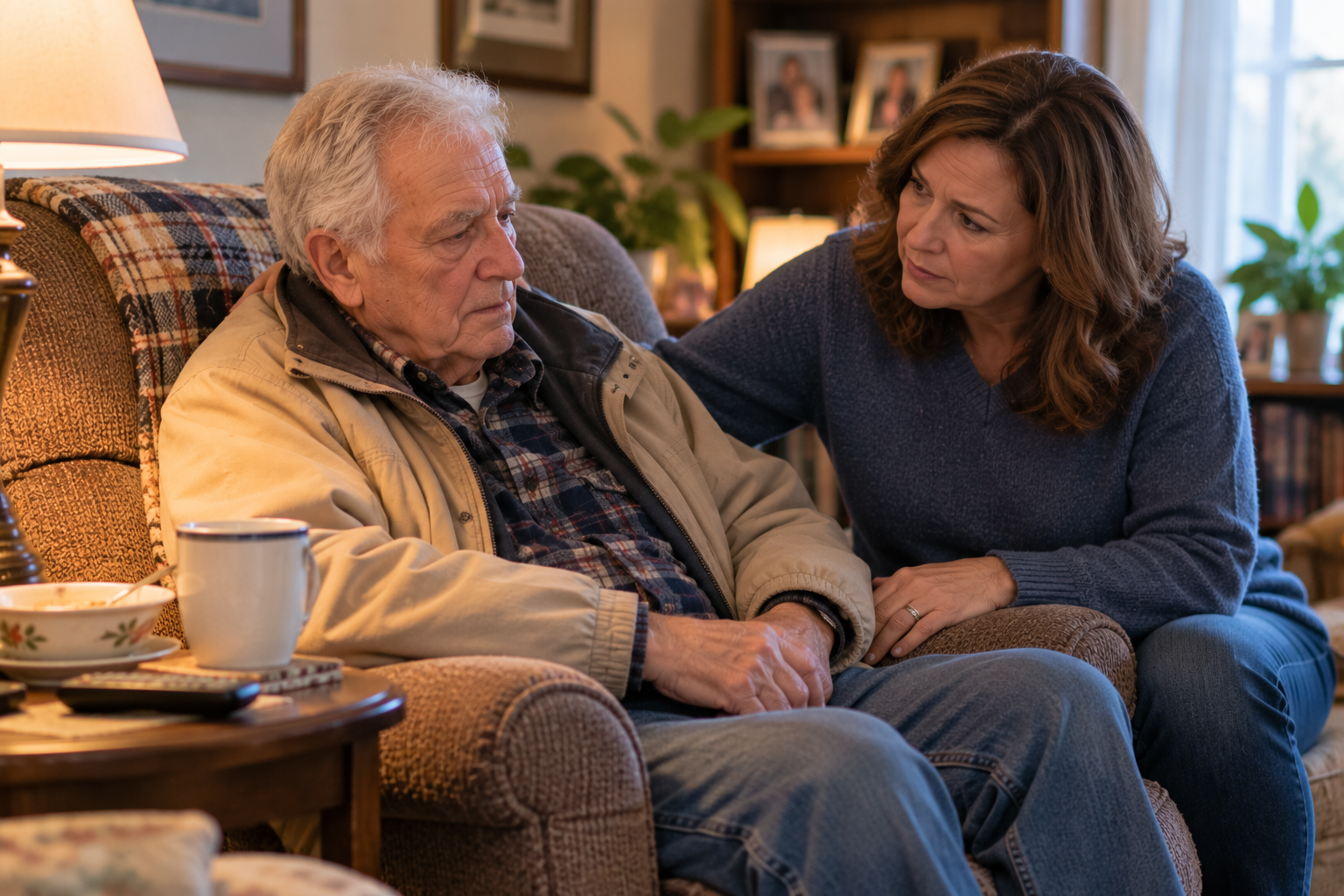
You’re canceling your kid’s soccer game because your parent had a fall. You’re missing dinner with your family because you’re at your parent’s doctor appointment.
Your kids say things like “can we just have normal family time?” Your parent says things like “I don’t want to be a burden.” And you feel guilty about both, constantly.
The Logistics Are Actually Impossible
Work. Kids’ school schedules. Kids’ activities. Your parent’s care needs. Your own wellbeing (which you’ve probably stopped thinking about).
Something has to give. Usually, it’s sleep, your mental health, and time with your spouse or partner.
The Financial Pressure Gets Worse
You’re paying for your kids’ activities or education. You’re helping cover your parent’s healthcare costs. The financial stress of being the bridge between two generations can feel overwhelming.
AARP has resources on understanding your financial options for elder care, but knowing that doesn’t ease the fact that you’re stretched financially too.
Your Relationship Takes a Hit
Your spouse or partner probably loves your parent. But they also want you present in your marriage and family.
When you’re exhausted from caregiving, your romantic relationship suffers. Communication breaks down. Intimacy disappears. Resentment builds—not because anyone’s doing anything wrong, but because you’re simply not available the way you used to be.
Your Kids Are Processing This Too
If your parent is experiencing cognitive decline or dementia, your kids are watching it happen. They’re seeing death and aging in real-time.
That’s profound and confusing for them. And they might be angry that Grandma or Grandpa’s needs are taking their parent (you) away from them. The Alzheimer’s Association has resources for talking to kids about dementia, but the emotional complexity doesn’t go away.
The Reality: You Can’t Do This Alone
You’ve probably been trying to convince yourself you can manage if you just try harder, organize better, sacrifice more.
You can’t. Not sustainably. And that’s not a personal failure—that’s reality. One person cannot effectively care for aging parents, raise kids, work, maintain a marriage, and maintain their own health.
What Actually Helps
If you’re in Michigan’s Great Lakes region—Marquette, Escanaba, Iron Mountain, Houghton, Menominee, or any of the Upper Peninsula communities—real support exists that can ease this impossible situation:
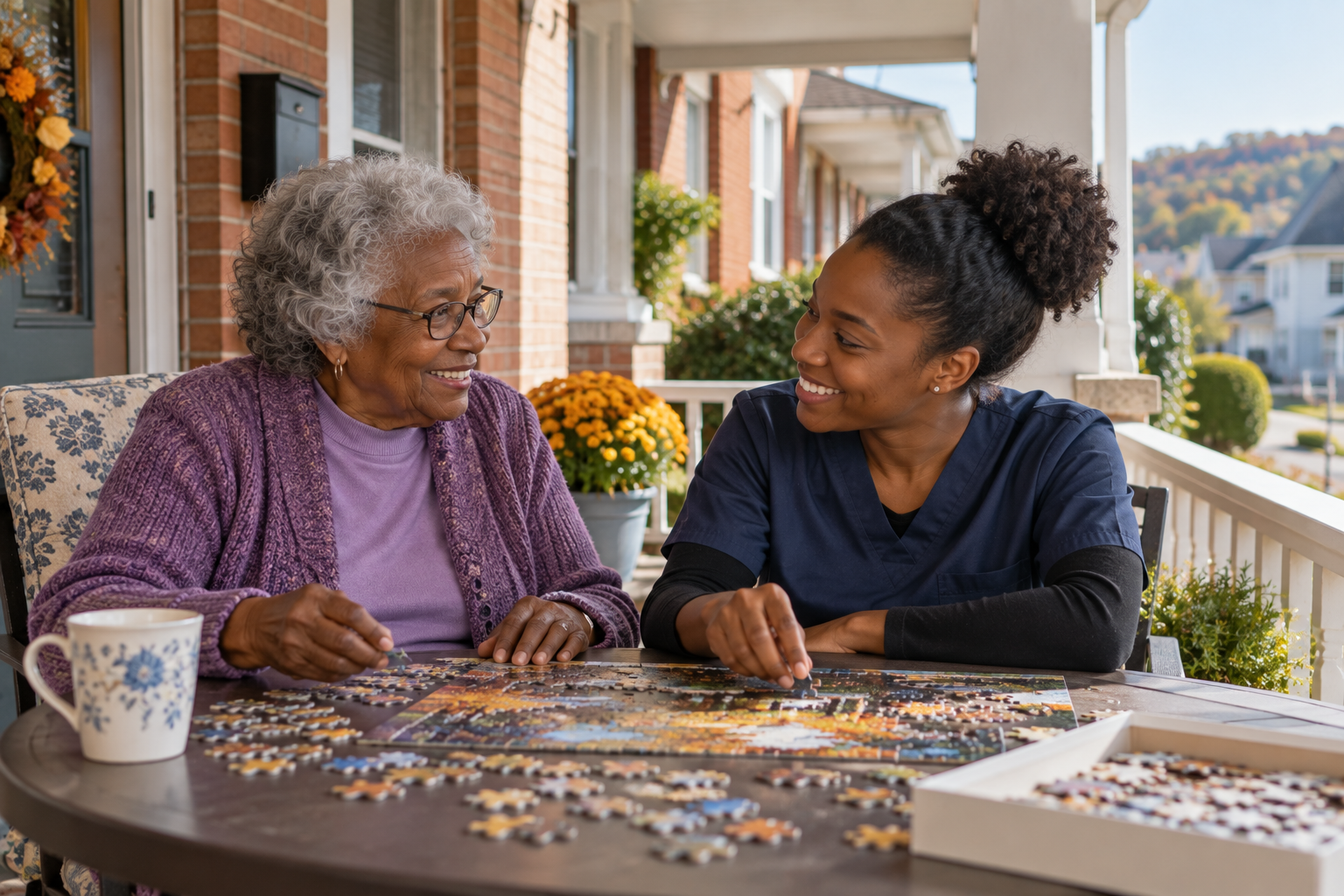
- In-home caregivers: Sunny Days caregivers in Michigan’s Great Lakes region handle your parent’s daily care—personal hygiene, medications, mobility support—so you can actually be present with your kids without running on empty.
- Respite care: Professional caregivers take over for a few hours so you can have uninterrupted family time. Or sleep. Or just exist without managing multiple crises simultaneously.
- Support groups for sandwich generation caregivers: Family Caregiver Alliance has groups specifically for people navigating this unique pressure of caring for both aging parents and kids.
- Adult day programs: Your parent gets socialization and structure. You get back some of your day to be present for your family.
Professional Care Isn’t About Abandoning Your Parent
Bringing in caregivers isn’t you giving up on your parent. It’s you making a realistic choice about what’s sustainable.
Your parent gets professional support. You get to actually be present—with them, with your kids, with your spouse, with yourself. That balance is what makes everything work.
It’s Actually Better for Everyone
When you have professional support handling your parent’s daily care, something shifts. You’re not running on fumes. You can have meaningful time with your parent without resentment or exhaustion fueling every interaction.
Your kids see you present. Your relationship with your spouse improves. Your parent gets consistent, trained care. Everyone wins.
Taking Back Your Life
If you’re reading this, you’re probably exhausted and angry and guilty and sad all at once. That’s the sandwich generation experience.
But it doesn’t have to stay this way. Whether you need full-time support or occasional respite, exploring in-home care services in Michigan’s Great Lakes region might be the breakthrough that lets you actually show up for both generations—and for yourself.