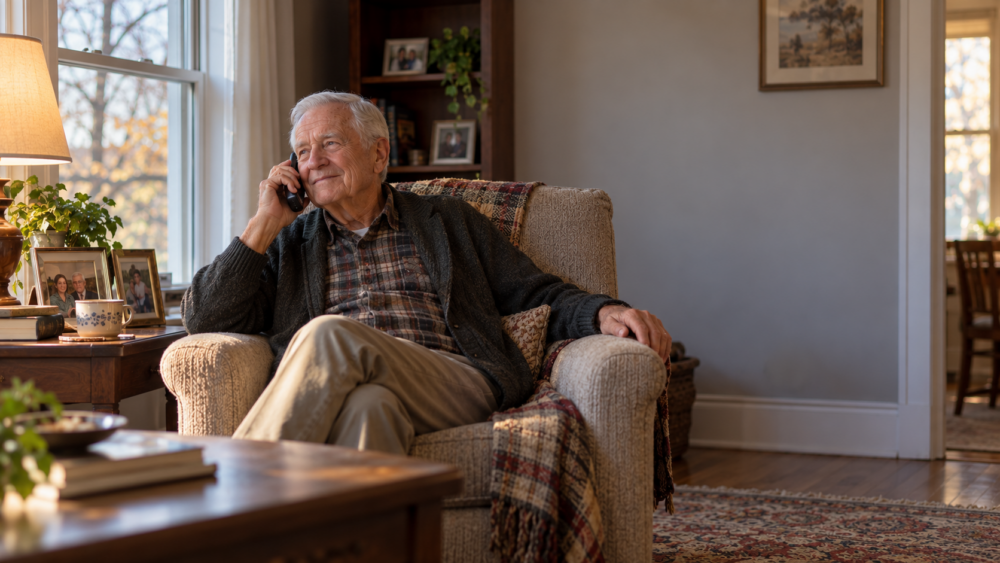
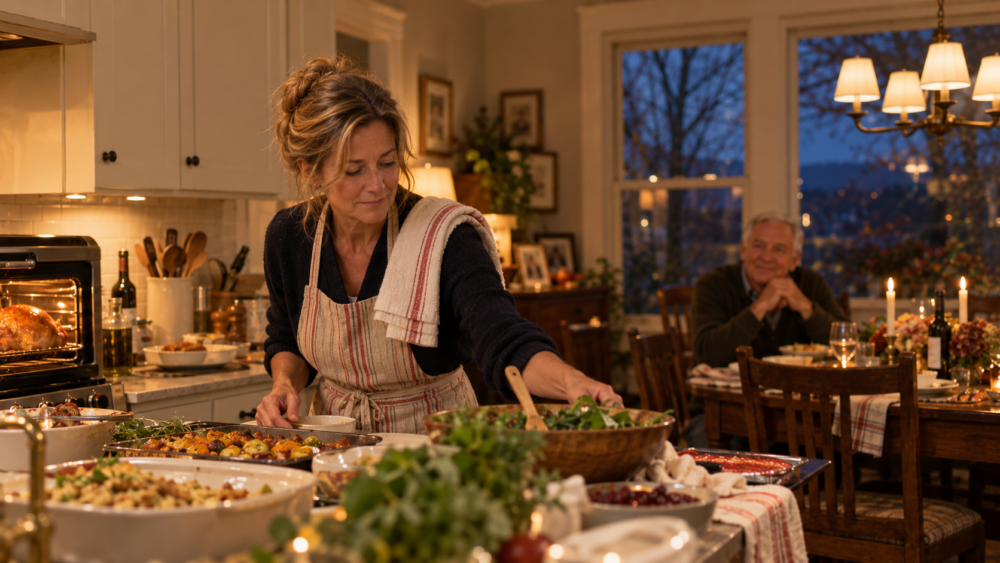
Everyone’s coming Thursday. Your sister from Columbus, the grandkids, your aunt. There’ll be fourteen people in a house built for six, and you’re the one doing the turkey, the sides, the beds, and the folding chairs out of the garage.
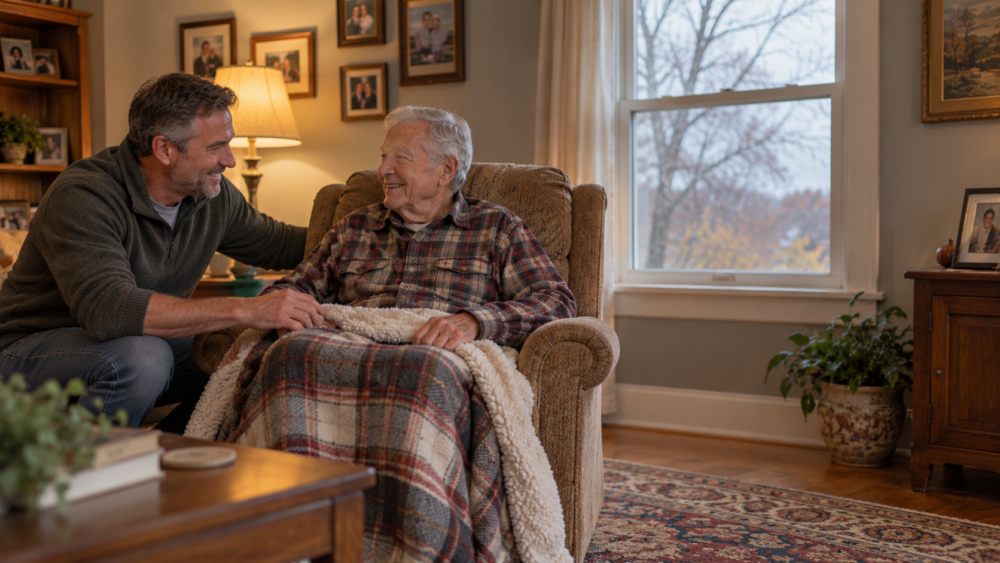
You’re also the one who gets Dad up, helps him dress, manages his medication, and keeps an eye on him while all of that is happening. You’ve been doing that part every day since spring. On Thursday you’ll do it in front of an audience, while basting something.
If the thought of the holidays is landing somewhere between dread and exhaustion, that’s not ingratitude. It’s arithmetic. And it’s a sharper version of something we’ve written about: what happens when caring for a parent takes over your life.
Why the Holidays Hit Caregivers So Hard
Because they add a second full workload without subtracting the first one.
Ordinary weeks are already full. Thanksgiving adds shopping, cooking, cleaning, hosting and managing everyone’s expectations — and none of Dad’s needs pause while you do it.
And there’s the part nobody warns you about
- Relatives who haven’t visited since summer will have opinions. Some of them about things you decided months ago, for good reasons.
- Dad may do worse with a houseful of people. Noise, disruption and a broken routine are hard on older adults, especially with any memory loss.
- You’ll be performing. Everything fine, everyone fed, nobody worried. That performance costs more than the cooking does.
- The comparison stings. Everyone else gets to arrive, eat and leave. You were here before and you’ll be here after.
What Actually Makes the Day Survivable
Decide now what you’re not doing
Not everything has to happen because it’s always happened. Pick two things to drop this year — the extra pie, the full set of good dishes, the tablecloth that needs ironing. Nobody will notice, and you’ll feel the difference by four o’clock.
Assign real jobs, in advance, by name
“Let me know if you need anything” is not help. Before Thursday, text specific assignments:
- Your sister brings two sides, finished, not ingredients
- Your cousin handles drinks and ice
- Someone’s taking the dishes, start to finish
- One person is on Dad for the afternoon — sitting with him, walking him out when it gets loud
That last one matters most and is the one people most often forget to ask for.
Give Dad an exit
Plan a quiet room he can retreat to, and plan when. Many older adults do better with a shorter, calmer version of the day — arriving later, eating, then having somewhere peaceful to go. Running him through six hours of commotion to prove the family’s all together usually serves the family more than it serves him.
If routine is what steadies him, keep it. Meals and medications at the usual times, even if the rest of the house is off schedule.
Protect one hour that’s yours
Before everyone arrives or after they go. A walk along the river, a drive, twenty minutes alone upstairs. The CDC’s guidance on caring for yourself while caring for another is clear that caregivers who never get a break eventually can’t sustain the care at all. One hour isn’t indulgent. It’s maintenance.
Use the Visit for Something Besides Dinner
November is National Family Caregivers Month, and Thanksgiving is the one day a year your whole family is in the same room. That’s an opportunity if you’re willing to use it.
Have the conversation while everyone’s there
Not at the table. After, with the people who matter, for twenty minutes. Bring the list of what you actually do in a week — the medications, the appointments, the driving, the nights you don’t sleep properly.
Most relatives in Weirton or Moundsville or wherever they’ve scattered to genuinely do not know. Some will still do nothing. But some will offer money for a few hours of help a week, or take the insurance calls, or commit to a weekend a month — and you’ll never find out which unless you ask plainly.
Find out what West Virginia offers
The federal Eldercare Locator will connect you to the Area Agency on Aging serving Ohio, Marshall, Brooke or Hancock County. West Virginia also runs the FAIR program — Family Alzheimer’s In-Home Respite — through the Bureau of Senior Services, which provides in-home respite for families caring for someone with Alzheimer’s or dementia. You can reach the Bureau at 1-877-987-3646 to ask what you qualify for.
After the Holidays Is When Families Decide
A lot of Northern Panhandle families reach the same point in early December: the house is quiet again, the relatives have gone home, and you’re back to doing all of it by yourself — except now you’ve seen what one afternoon of help felt like.
That’s usually when people call. Our respite care services in the Northern Panhandle cover Wheeling, Weirton, Moundsville, Wellsburg, Follansbee, New Cumberland and Chester, and most families start with a few hours a week rather than anything dramatic.
And if you’re looking for gentler things to do with him through the winter, we put together some seasonal activities for seniors in the Wheeling area that work well on an ordinary afternoon.
You’re Allowed to Want It to Be Easier
You’ll get through Thursday. You always do. But getting through it shouldn’t be the standard, and doing it alone shouldn’t be the plan for next year.
If you’d like to talk about what help could look like — before the holidays or right after — reach out to Sunny Days In-Home Care Northern Panhandle WV or call (304) 650-6359.