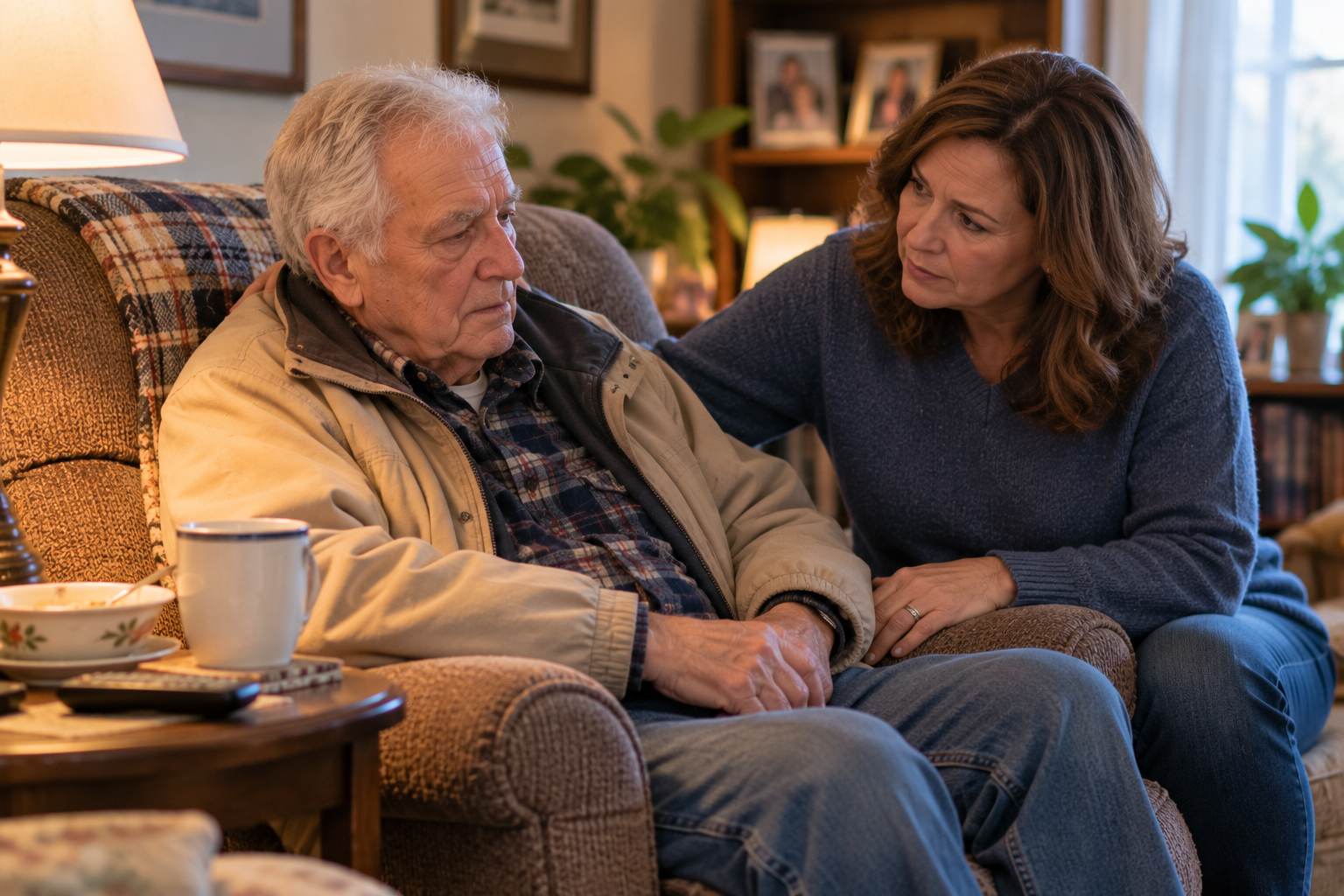
Everything up here is a drive. The clinic is a drive, the good grocery store is a drive, and the nearest facility with an open bed might be two towns and a snow squall away. So when your mom starts needing more help than a weekly check-in, moving her isn’t just hard on her. It can mean pulling her out of the only place she’s ever belonged.
There are ways to pay for help that lets her stay. The big one for Michigan families is the MI Choice Waiver in the Upper Peninsula, and it’s worth understanding before winter sets in. Our broader guide on how to pay for in-home care covers Medicare, insurance, and the rest.
MI Choice, Explained Without the Jargon
MI Choice is Michigan’s Medicaid program for long-term care delivered at home. According to the Michigan Department of Health and Human Services, it serves adults who meet income and asset rules and need nursing facility services that can instead be provided in their own home or another residential setting.
Put plainly: if your mother needs the kind of care a nursing home gives, MI Choice may pay for her to get it in her own kitchen in Escanaba.
Two Things Decide Eligibility
The first is care needs. She has to need nursing-facility-level help, which usually means hands-on assistance with bathing, dressing, moving around, or managing medications.
The second is money. She has to fall within Michigan Medicaid’s income and asset limits.
Both have more wrinkles than a summary can hold, so ask before you assume the answer is no. We’ve seen families skip the application for years over a guess.
The people to call in the U.P.
MI Choice runs through local waiver agencies. Up here that’s UPCAP, the Upper Peninsula Commission for Area Progress. They handle assessments and can walk you through what happens when.
How It Goes
The first call
They’ll ask screening questions about her health and what she can and can’t manage on her own. Have specifics ready. “She hasn’t cooked since August” beats “she’s slowing down.”
The assessment
Someone comes out to see how she’s really doing. If you live downstate or out of state, ask whether you can join by phone. It’s easy to lose an approval to a parent who insists she’s doing great while the fridge is empty.
Medicaid eligibility
If she isn’t on Medicaid already, that application is part of this. The waiver agency can tell you what they need from you.
The care plan
After approval, a plan gets built around what she needs, and you have a say in who provides the care.
If you’re four hours away
Plenty of U.P. families have kids in Green Bay, Madison, or downstate. Make sure somebody local has your number, ask to be included in calls, and keep one shared folder of paperwork so you’re not reconstructing it over the phone at midnight.
The Other Ways Families Cover Care
MI Choice isn’t the only route, and most families end up using more than one.
If your parent served
There’s a long tradition of service up here, and VA programs may pay for in-home help. Our home care for veterans page covers how we work with veteran families.
Paying directly
Private pay starts immediately, with no approvals to wait on, which is why so many families use it to cover the gap while an application is pending. Our pricing and payment options page shows what it runs.
If your parent is on the Wisconsin side
We also serve Marinette, Menominee, Florence, and Oconto counties. Wisconsin runs its own Medicaid programs with their own rules, so call and we’ll help you figure out which door to knock on.
Get Ahead of the Snow
You already know what January does here. The steps ice over, the driveway doesn’t get cleared, and a trip to the store becomes a genuinely bad idea. What used to be a manageable situation in September turns into a fall on the back porch in February.
This isn’t unusual, either. The Administration for Community Living estimates that someone turning 65 today has close to a 70% chance of needing long-term care at some point.
Somebody coming by a few times a week through the winter means the walk is clear, the pantry has food in it, and there’s a person who would notice if something were wrong. Our post on keeping aging parents in their home has more on making a house work for someone who’s staying in it.
What a Few Hours a Week Actually Covers
People picture medical equipment and hospital beds. It’s usually much more ordinary than that.
A caregiver gets her showered and dressed, cooks something better than toast and leaves a couple of meals in the fridge, keeps up with laundry and dishes, makes sure the pills got taken, drives her to the clinic or to church, and stays a while to talk. In a long winter that last part carries more weight than families expect. A lot of our clients go days without seeing anyone otherwise.
Caregivers Who Know the Roads
Our Great Lakes team covers Marquette, Delta, Schoolcraft, Dickinson, Iron, Houghton, and Gogebic counties. Our caregivers live here. They know what it means when the forecast says lake effect, and they know half the people at the post office.
We also keep the same caregiver with the same client as much as we can. In a place this small, that relationship usually turns into something more like family than service.
Give Us a Call
MI Choice, VA benefits, private pay, or some mix of all three, we’ll help you work out what fits. Tell us what’s going on with your mom.
Contact Sunny Days In-Home Care Great Lakes or call (906) 458-6053.